
Stone House Restoration Project
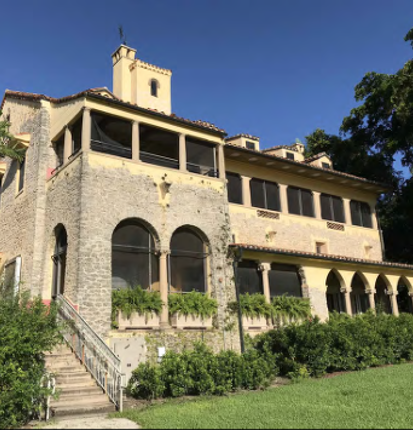
In 1922, Charles Deering chose a Mediterranean Revival design for his 13,900 square foot Stone House to remind him of his properties near Barcelona and to provide him with a fire-resistant repository for his collection of fine art and antiques. With its massive stone façade, square shape, and decorative arches and columns, the house was intended to look like a centuries-old Spanish fortress.
Stone House: A Brief History
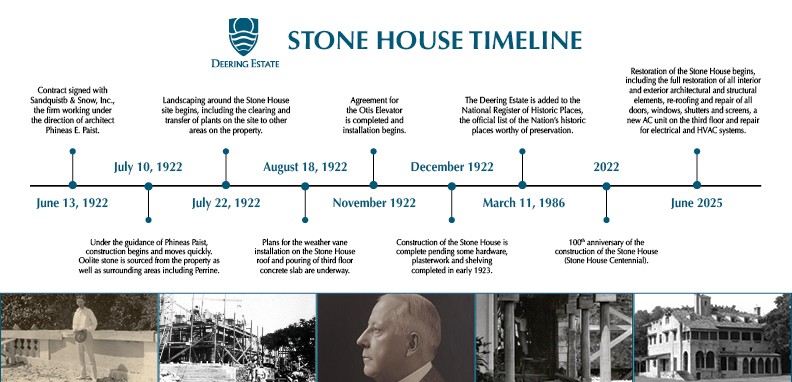
On the 13th day of June 1922, Charles Deering entered into an agreement for the construction of the Stone House with Sandquist & Snow, Inc., the firm working under the direction of architect Phineas E. Paist. In 1916, Paist worked as an associate architect to Paul Chalfin in building Villa Vizcaya, James Deering’s palatial residence in Florida; and in 1923, George E. Merrick appointed Paist as the Supervisor of Color for the Coral Gables Corporation, adding him to the development team of the garden city. Paist established the review process for all buildings constructed in the city, today this process is known as the Board of Architects. Phineas Paist’s aesthetic choices undeniably left a defining presence in the local architectural landscape which resonates to this day. The Stone House is a prime example of Paist’s south Florida architectural legacy.
The Stone House is built with 18-inch and 24-inch thick, reinforced concrete walls covered in limestone veneer to imitate the rugged, exposed stone of Tamarit, another of Deering’s residences in Spain. Its construction includes a roof made from handmade Cuban barrel clay tiles, antique wrought iron window grilles, and Romanesque arcades of hand-carved columns with capitals depicting mainly botanical and animal motifs, as well as personalized family iconography. Construction took just eleven months and was completed between 1922 and early 1923.
Scope of Work
Full restoration of all interior and exterior architectural and structural elements, re-roofing and repair of all doors, windows, shutters and screens. A new AC unit on the third floor and repair for electrical and HVAC systems.
Project Team
- R.J. Heisenbottle Architects
- HB Construction
- Miami-Dade County Parks, Recreation, and Open Spaces Department
- Miami-Dade County Office of Historic Preservation
Stone House Timeline
Preparation for Restoration

Restoring History: The Stone House's Cuban Roof Tiles

Fishbaugh, W. A.(William Arthur), 1873-1950. Cuban roof tiles being unloaded from the Mar Blanco – Miami, Florida. 1925-08-14. State Archives of Florida, Florida Memory
Installed in 1922 during the construction of the Stone House, the clay roof tiles at the Deering Estate were imported from Cuba at a time when South Florida relied on Caribbean craftsmanship to achieve the Mediterranean Revival style. Because the region lacked suitable clay deposits, builders sourced handmade terracotta barrel tiles from Cuban workshops, where artisans shaped the clay by hand and kiln-fired each piece. Packed in crates and shipped by steamship from Havana to Miami during the height of the Florida land boom, these tiles reflect the close cultural and commercial ties between Cuba and South Florida.
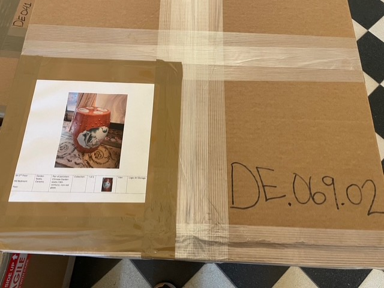
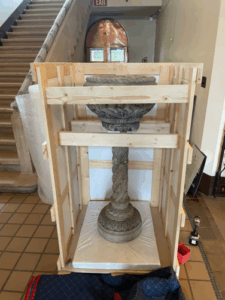
As part of the Stone House restoration efforts, these historic tiles are being carefully removed, documented, and preserved for future display in the museum, ensuring their craftsmanship and history remain accessible to the public.
Stone House Next Door
While the Stone House is undergoing restoration, Museum staff will continue sharing its stories – and those of the Deering family – through Stone House Next Door, a series of exhibitions inside the Richmond Cottage that evoke the spirit, architecture, and memory of this iconic home.
Daily Guided Museum Tours
Guests can enjoy daily guided museum tours (exterior of Stone House & interior of Richmond Cottage) to journey through the pre-history of the site, learn about early settlers, and uncover the story of Charles Deering. Discover how the Stone House’s Mediterranean Revival architecture later inspired Phineas Paist in designing Coral Gables. There are many exciting stories to explore at Deering Estate.
Short Film
The 100 Ladies of Deering proudly present “Restoring a Legacy – Stone House at Deering, Chapter 1: The Vision and Preparation”
Originally completed in 1922, Charles Deering’s Stone House has stood for more than a century. Today, new efforts are underway to preserve its museum collections and restore the home so it can be enjoyed for generations to come.
This short film explores the vision and planning behind the restoration, including the thoughtful preparation and funding required to protect this treasured historic landmark. It also highlights how the work is being carefully carried out while both the park and the Richmond Cottage remain open to the public.
View the film online
Credit: Jorge Graupera Films